Productions & Services
The firm operates three specialist service lines, all governed by the same quality assurance framework and documented to the same standard.
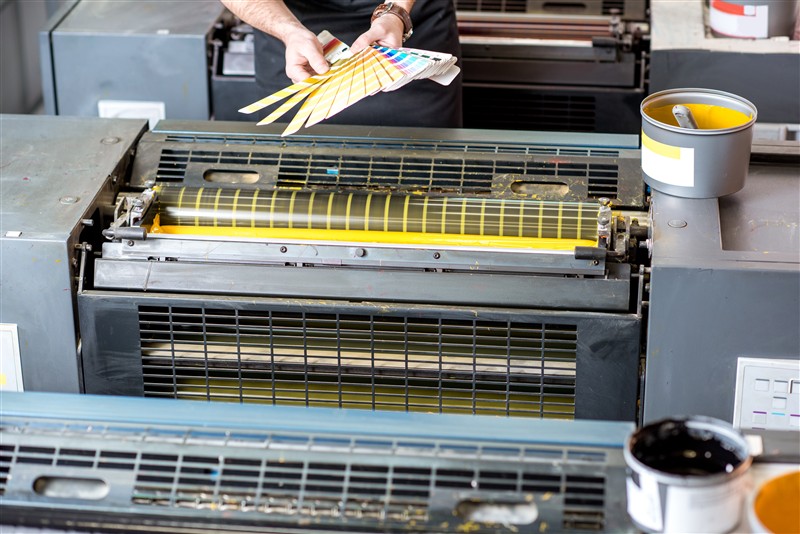
Physical Stimulus Production
Custom printing of projective instruments. Archival-grade cotton-rag cardstock, pigment-based inks calibrated to CIE L*a*b* reference values, colour verification at three points during every print run. The production standard is not adjusted for run size: the smallest run in the company's history was forty-seven copies (Inkpot Games, Percept, 2013); the largest institutional runs have exceeded fifty thousand units. The quality standard at both ends of the scale is identical. Authentication markers are embedded in every production run as standard and verified during post-production inspection.
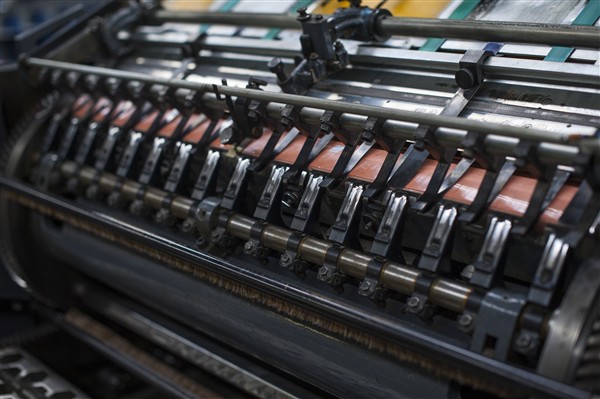
| Substrate | Archival-grade cotton-rag cardstock, 300-350 gsm. pH neutral, alkaline-buffered. ISO 9706 compliant. |
|---|---|
| Inks | Pigment-based, lightfast, archival quality. Blue Wool Scale 6 minimum. Delta E less than or equal to 2.0 across print run (CIE76). |
| Calibration | Spectrophotometer verification at start, middle, and end of each print run. Measured against CIE L*a*b* reference values. |
| Documentation | Production date and operator, substrate batch and mill certificate, ink batch and spectral records, in-process colour data, final verification against reference standard, chain of custody initialisation. |
Archival Materials Management
Long-term preservation of assessment materials in climate-controlled facilities. The archival storage wing, constructed in 1998 in consultation with conservation specialists from two national archives, maintains 18°C plus or minus 1°C and 45% plus or minus 5% relative humidity, monitored at fifteen-minute intervals with automated alerting. HEPA air filtration. UV-filtered lighting. Inert-gas fire suppression. Dual-custody access protocol: no single person may access restricted materials alone. All access events are logged with individual identification and timestamp.
Every item entering archival storage undergoes condition assessment with high-resolution photography under controlled lighting, spectral measurements, and a structured condition report. Preventive conservation is the default approach; any intervention requires client authorisation and is performed using reversible, documented techniques. The digital catalogue is backed up off-site and integrity-checked against the physical inventory on a rolling schedule.
The largest single archive in the firm's care is the collection of the Institute for Projective Sciences: 4.7 million response protocols, undergoing digitisation since 2019.
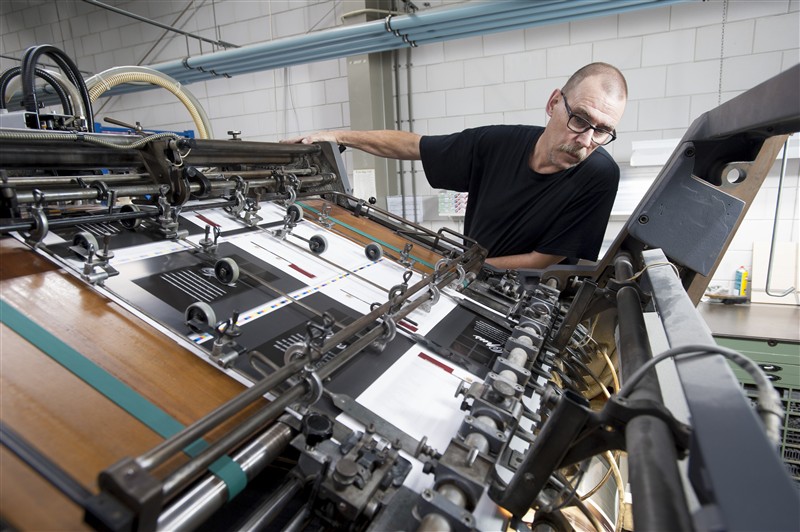
Digital Reproduction & Validation
High-resolution scanning of physical materials with spectral calibration targets included in every scan session. Minimum 600 dpi optical resolution (1,200 dpi available for fine-detail materials). 48-bit colour depth with Adobe RGB or ProPhoto RGB working space. TIFF archival masters with embedded capture metadata, calibration data, and unique identifiers.
Digital reproductions are validated against the perceptual equivalence standards maintained by the Perceptual Analytics Group (PAG). These standards define the conditions under which a digital representation of a projective stimulus is considered functionally identical to its physical original for assessment purposes. Validation is performed per-item; each reproduction receives a validation record documenting the standard applied, the verification method, the measurements, and the outcome.